Seasoned meditators often ask, "Out of 84,000 teachings, why did the Buddha open with the Four Noble Truths?" Here's why this short framework became the constitution of the entire tradition — and how that matters for your daily practice.
1. They're the "mother text" of every later teaching
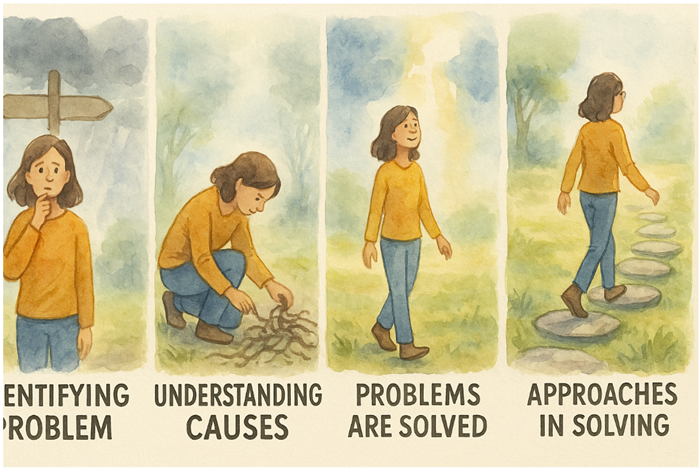
Ancient commentators call the Four Noble Truths (dukkha, samudaya, nirodha, magga) the mother-manual of Buddhism. Just as a nation's constitution guides all other laws, every sutta, chant, or meditation method is a footnote to these four insights.
2. The Buddha revealed them first because they describe the whole liberation process
- Dukkha — the symptom
- Samudaya — the root cause
- Nirodha — the possible cure
- Magga — the treatment plan
Early texts liken this to a skilled physician diagnosing, explaining the pathogen, promising recovery, then handing you medicine. Without that diagnosis-to-cure map, later practices would feel random.
3. Seeing (not reciting) the Truths shakes the whole samsaric "prison"
The Buddha taught that merely hearing Truth #1 — "life is permeated by dukkha" — can jolt a person awake, the way a prisoner's first glimpse of the exit plan sparks jailbreak momentum. Masters warn that until we "see" these truths directly, we keep wandering in the ocean of birth and death without a destination.
4. They serve two distinct audiences
| Traveler (enjoys worldly life) | Leaver (seeks complete release) |
|---|---|
| Uses the Truths to travel safely — good rebirths, wholesome karma | Uses the same Truths to cut the cycle entirely |
| Focus on Right Speech, Right Livelihood, generosity | Deepens into renunciation, insight, and cessation |
The Buddha's genius was student-centered: he adjusted depth and language to match each listener but kept the same core map.
5. Why "Dukkha" must be broad, not just "suffering"
Western books often shrink dukkha to obvious pain. Early Pali sources stretch it across eleven domains — from hunger and heat to not getting what you want, separation from loved ones, aging, and death.
Getting that wide lens is critical, because Step 1 is to identify dukkha — not to wallow in it. Accurate problem-scoping is half the cure.
6. Root cause leads to real agency
Once you trace pain back to craving (tanhā), you realize the game isn't rigged by fate or a deity; the variables sit in your own heart-mind. That insight turns despair into design power — you can stop reinforcing the cause and start cultivating its opposite.
7. Why they came immediately after enlightenment
The Buddha's first sermon, the Dhammacakkappavattana Sutta, is essentially a Four-Truths press conference. Chronicles say he "needed no invitation" to teach this topic — it was the indispensable starting point. Until listeners grasped the framework, subtler subjects — like emptiness or dependent origination — would be like calculus to someone who'd never seen arithmetic.
Quick Ways to Apply Them Today
- At the first sign of stress, label the exact flavor of dukkha (Is it unmet wanting? Fear of loss?).
- Ask what craving fuels it — status, certainty, comfort?
- Imagine the felt sense of nirodha (even two seconds of letting go).
- Pick one path factor — Right Effort, Speech, or Mindfulness — to express that letting-go in action.
Bottom line
The Four Noble Truths aren't Buddhism 101 — they're Buddhism all the way through. They diagnose, explain, promise, and prescribe. Master the framework once, and every other teaching slips neatly into place.