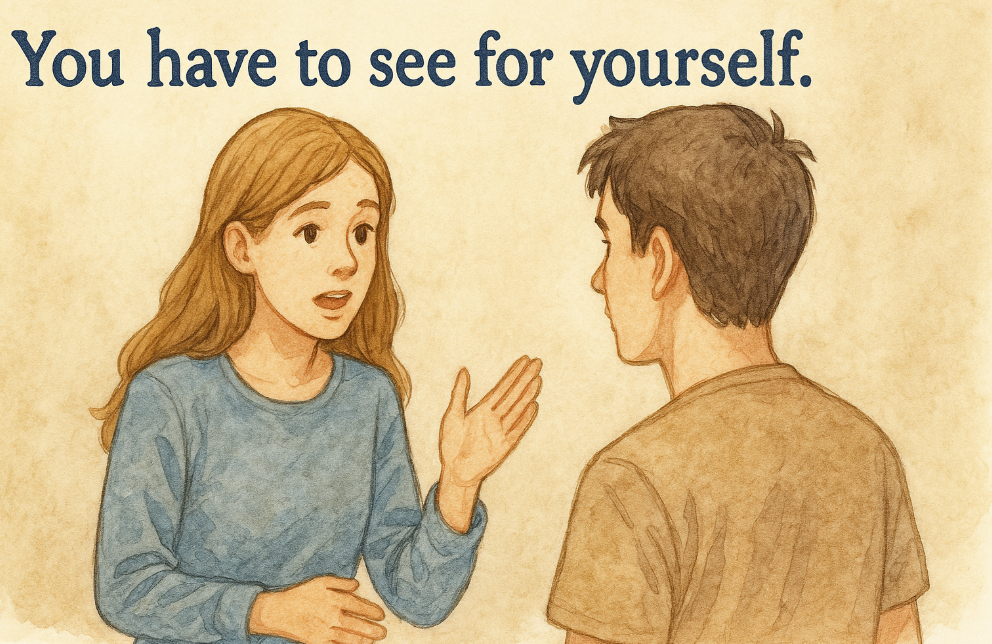
Ever find yourself lying awake at 3 AM, mind spinning with questions like "Why did this happen to me?" or "What's the meaning of it all?"
You're not alone. And here's the twist: the Buddha, often seen as the ultimate philosopher, actually warned against overthinking certain things.
He called them the acinteyya (อจินไตย) — literally "the unthinkables" or "things that shouldn't be pondered." Not because they're taboo, but because obsessing over them can drive you straight into what he colorfully called "madness and frustration."
The Four Mental Rabbit Holes
1. The Buddha's Enlightenment (buddhavissaya)
"How exactly does enlightenment work? What does a Buddha really experience?"
It's like a kindergartener trying to understand quantum physics. Not because you're stupid — you're just missing the experiential foundation. If a kindergartener tries to figure out how to build a rocket to Mars, they'll just frustrate themselves. But give them time, education, and experience? Different story.
2. The Jhana States (jhanavissaya)
"What's it really like to experience these deep meditative states?"
Imagine trying to explain the taste of chocolate to someone who's never eaten it. You can use all the words you want — "sweet," "rich," "creamy" — but until they taste it themselves, it's just concepts. The jhanas are experiential territories that require direct exploration, not intellectual mapping.
3. The Precise Workings of Karma (kammavipaka)
"Why did this specific thing happen to me? What exact past action caused this?"
This is the big one. The one that keeps people up at night. Yes, karma is real — cause and effect operates on all levels. But trying to trace the exact karmic threads is like trying to identify which specific bite of food became which exact cell in your body. You know the food nourished you, but the precise mechanics? That's a fool's errand.
4. Speculation About the Universe (lokacinta)
"Who created the universe? What came first? Where does it all end?"
The Buddha compared this to a man shot with a poisoned arrow who refuses treatment until he knows who shot it, what wood the arrow was made from, and what village the archer came from. By the time he gets his answers, he's dead.
Why This Matters Now More Than Ever
In our age of infinite Google searches and Reddit rabbit holes, we're professional overthinkers. We believe every question must have an answer we can intellectually grasp. But the Buddha's teaching here is radically practical: some understanding comes only through experience, not analysis.
Think about it:
- You can read every book about swimming, but you won't know how to swim
- You can study the neuroscience of love, but it won't help you feel it
- You can memorize maps of Paris, but it's not the same as walking its streets
The Hidden Gift in "Don't Think About It"
This isn't anti-intellectual. The Buddha wasn't saying "don't be curious" or "just have blind faith." He was pointing out that some questions are answered by transformation, not information.
Instead of asking "Why did this happen to me?" the practical question becomes "What can I do now?"
Instead of pondering "What is enlightenment really like?" the path says "Here's how to walk toward it."
When Your Mind Goes Down the Rabbit Hole
Next time you catch yourself in an overthinking spiral about why your life is the way it is, what happens after death, why good people suffer, or the meaning of existence — remember: these aren't puzzles to solve. They're experiences to grow into.
The Thai meditation master quoted in the ancient texts put it beautifully: collect these questions, but don't let them drive you crazy. Use them as motivation: "Before I die, I'll understand this through direct experience."
The Practical Takeaway
The Buddha's approach was always pragmatic. He taught what leads to less suffering and more freedom. Obsessing over the unknowable? That leads to more suffering. Focusing on what you can actually practice and experience? That leads to freedom.
So the next time your mind starts spinning on the cosmic questions, remember: some answers come not through thinking harder, but through living deeper.